
Video intercom and access control are usually specified by different people and installed by different trades, yet they control the same door. When the two are designed together, residents get a single, predictable entry experience. When they are not, the result is a door that releases from the indoor monitor but not from the card reader, or a lock that buzzes and eventually burns out its relay.
This guide covers the design decisions that matter when intercom and access control meet at a door.
Two Ways In: Intercom Release and Credential Entry
A modern entrance typically offers two entry paths that must coexist:
- Intercom release: a visitor calls, a resident answers on the indoor monitor, and the resident presses unlock
- Credential entry: a resident presents a card, fob, PIN or biometric at the door station or a separate reader
Both paths end at the same electric lock, which is where the design discipline is required. The intercom relay and the access controller must be wired so that either can release the lock without back-feeding into the other.
Choosing the Lock
Lock selection is the first decision and it constrains everything downstream.
Electric strike
Replaces the strike plate and releases the latch. It does not change the existing lock, so it works on fire-rated and heritage doors. Usually fail-secure: power failure leaves the door locked, which is the correct behaviour for a residential entrance.
Magnetic lock
Holds the door with electromagnetic force on the face of the door. Very strong holding force and simple to fit, but it typically requires the door to be modified and is often fail-safe, meaning power loss releases the door. That is the wrong default for a building entrance unless the fire strategy requires it.
Motor or bolt lock
A self-contained lock that consumes power only while moving. Lower standby current than a magnetic lock, but higher cost and a deeper door pocket requirement.
As a rule: for residential entrances, prefer fail-secure so that a power cut does not open the building. Where life-safety requirements demand fail-safe egress, meet that requirement through a compliant request-to-exit path rather than by leaving the perimeter unlocked.
The Relay Rating Trap
This is the most common integration failure we see, and it is entirely avoidable.
An intercom door station or indoor monitor provides a dry-contact relay that is rated for a modest current — often in the region of 1 A at low voltage. An electric strike may draw well over that at inrush, and a magnetic lock can draw several hundred milliamps continuously plus a surge.
Connecting the lock directly to the intercom relay causes three predictable outcomes:
- The relay contacts pit and weld, so the door stops releasing
- The voltage sags at the moment of release, causing the monitor to reset or the video to drop
- The lock releases weakly and intermittently, which users report as the door being temperamental
The solution is standard practice in access control and often skipped in intercom-only projects: drive the lock from a dedicated lock power supply, and use the intercom relay or access controller merely to switch an interposing relay or the power supply trigger input.
Intercom relay (dry contact) drives the interposing relay coil. The interposing relay contact triggers the lock power supply. The lock power supply output feeds the electric strike or magnetic lock. This keeps high lock current out of the intercom entirely and makes each subsystem independently serviceable.
Sharing One Lock Between Two Controllers
When both the intercom and an access controller must release the same lock, do not simply parallel their outputs. Two dry contacts in parallel can create unintended paths and make fault diagnosis very difficult.
Cleaner options:
- Diode-isolated parallel contacts where both devices switch the same lock supply trigger, with diodes preventing back-feed
- Single controller as master — one device owns the lock, and the other signals it via a request input
- Intercom relay drives the access controller request-to-exit input, so all lock logic lives in one place with one audit log
The third option is usually the best design, because it produces a single audit trail: every unlock, whether from an indoor monitor or a card, appears in one log.
Credential Technologies at the Door
- 125 kHz proximity cards: the legacy standard, cheap and widely compatible, but easy to clone
- 13.56 MHz smart cards (Mifare and equivalents): supports encrypted sectors and unique identifiers, the practical default for new projects
- PIN code: useful as a secondary factor and for visitors or contractors; weak on its own
- Biometric (fingerprint or face): high convenience and strong non-transferability, best deployed where enrolment can be managed centrally
- Mobile credentials: convenient and revocable remotely, but dependent on a network and on the resident keeping the phone charged
For most residential buildings, a 13.56 MHz smart card plus PIN as an optional second factor is the best balance of security, cost and administration effort.
Power Supply Design
Power is where good intercom projects are quietly ruined.
- Size for inrush, not steady state. Lock inrush can be several times the holding current; undersized supplies cause voltage collapse and intermittent release
- Separate supplies. Keep the intercom bus supply and the lock supply independent so a lock fault cannot take down the whole system audio and video
- Battery backup. If entry must work during a power cut, put the lock supply and the switch or door station on UPS or battery-backed supply. Remember that a fail-safe lock will release when its battery depletes unless this is designed for
- Voltage drop calculation. Long cable runs to a car park gate or remote gatehouse drop voltage quickly; calculate at the furthest point
Commissioning Checklist
- Confirm the lock operates reliably from every release path: indoor monitor, door station keypad, card reader and management station
- Verify relay and supply ratings against the measured lock current, not the datasheet figure alone
- Confirm fail-safe or fail-secure behaviour by simulating a power loss
- Test every credential type and confirm that revoked credentials are actually rejected
- Confirm the audit log records the source of every unlock
- Confirm video, audio and unlock all work simultaneously, not just individually
Frequently Asked Questions
Can one door station handle both intercom calling and card access?
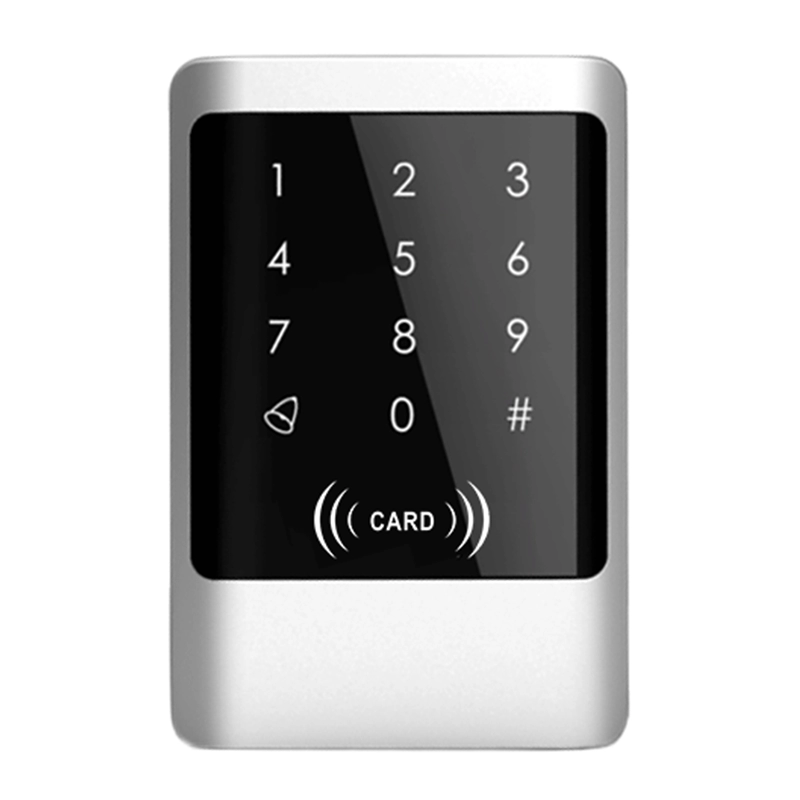
Yes. Many modern door stations combine a call button array, keypad and RFID reader in one housing, which reduces wall clutter and simplifies wiring. Confirm the reader frequency and capacity match your credential plan.
Why does the door release from the app but not from the indoor monitor?
Usually a wiring or relay assignment issue rather than a hardware fault. Check that the monitor unlock output is actually wired to the lock path and that the relay rating is adequate. If both paths route through an access controller, verify the request input is configured.
Should a magnetic lock be used on an apartment entrance?
Usually not. Magnetic locks are typically fail-safe, so a power cut opens the building. Use a fail-secure electric strike unless the fire strategy explicitly requires fail-safe operation.
How do I add access control to an existing intercom installation?
Fit a reader or an intercom door station with built-in RFID, add a dedicated lock power supply, and move lock switching to that supply with the intercom relay as the trigger. Do not extend the existing intercom relay to carry lock current.
Conclusion
Intercom and access control integration succeeds or fails on a small number of engineering details: the lock type, the relay rating, the power supply and the wiring topology. Get those right at design stage and the door behaves predictably for the life of the building.
Shenzhen Iris Information Technology develops and manufactures building intercom systems and access control products as a single portfolio — Linux digital intercom, two-wire intercom, analogue intercom, access control units and accessories — which means intercom-to-access-control integration can be designed as one system rather than stitched together on site. Contact us to discuss your entrance design.
About the Author
Written by the systems engineering team at Shenzhen Iris Information Technology Co., Ltd., which designs and manufactures building intercom and smart access control systems for residential, commercial and institutional projects.